Why Indian Wedding Photography Is Unlike Any Other
India hosts over 10 million weddings every year, making it one of the most wedding-dense nations on earth. Each ceremony — whether a Rajasthani baraat thundering through the streets of Jaipur, a serene Keralite Sadhya wedding on a coconut-palm estate, or a glittering Punjabi Anand Karaj — demands a unique visual language.
Unlike Western ceremonies that typically span a single afternoon, Indian weddings unfold across multiple days. Mehendi, Haldi, Sangeet, the wedding ceremony itself, and the reception — each deserves its own photographic treatment. A skilled wedding photographer in India must be equal parts documentary filmmaker, portrait artist, and light-room technician.
"In India, the wedding is not a destination — it is a journey. The best wedding photographs capture not just the rituals, but the invisible threads of love, laughter, and legacy woven between them."
Modern Indian wedding photography has evolved dramatically over the last decade. The stiff studio portraits of previous generations have given way to cinematic, emotion-first storytelling. Couples now invest in pre-wedding shoots, aerial drone coverage, and even short films that rival feature productions in their ambition and craft.
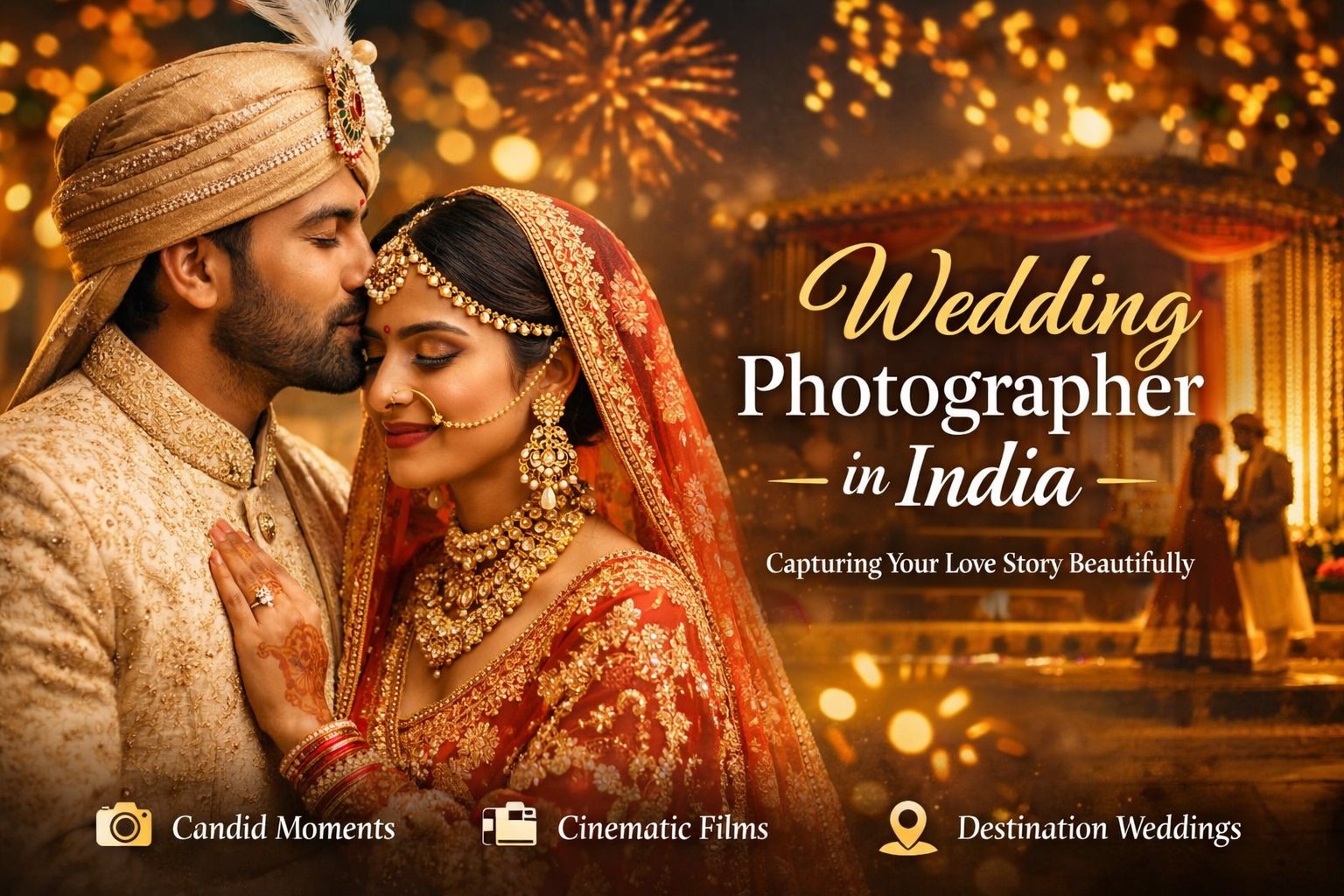
The Different Styles of Wedding Photography in India
Before you begin your search for a wedding photographer, understanding the dominant styles will save you weeks of confusion and ensure your final album truly reflects who you are as a couple.
Candid / Photojournalistic
The most sought-after style today. The photographer blends into the crowd, capturing unguarded laughter, stolen glances, and tearful embraces as they naturally unfold.
Traditional / Posed
Structured portraits of the couple, family groups, and wedding party. Timeless, formal, and ideal for large families who want everyone represented.
Cinematic / Editorial
High-production shoots with dramatic lighting, fashion-forward composition, and bold post-processing. Feels like a magazine spread come to life.
Fine Art / Moody
Painterly, soft, and atmospheric. Often uses natural light, muted tones, and artistic framing. Popular at destination and heritage property weddings.
Aerial / Drone
Sweeping bird's-eye views of venue, processions, and landscape. Transforms a royal venue or beachside ceremony into something truly breathtaking.
Film / Analog
Shot on 35mm or medium-format film. Grainy, warm, and deeply nostalgic — gaining significant popularity among couples seeking a vintage aesthetic.
Pro Tip
Most top wedding photographers in India blend multiple styles. A great professional will spend 70% of the event shooting candidly, and reserve structured time for family portraits and couple sessions. Always ask to see full galleries — not just highlights — to understand their real range.
Top Cities for Wedding Photography in India
India's geography and cultural diversity mean that the wedding photography landscape varies enormously from city to city. Here are the major hubs and what makes each unique:
Destination Weddings: A Growing Trend
Rajasthan — particularly Jaipur, Jodhpur, and Udaipur — has become the uncontested capital of destination weddings in India. Heritage hotels like Umaid Bhawan Palace and Taj Lake Palace offer backdrops so extraordinary that even average photography looks spectacular. Photographers who specialise in these venues know how to use the amber sandstone, mirrored halls, and stepped gardens to maximum effect.
Goa remains the top choice for beach weddings, with its relaxed aesthetic, golden-hour light over the Arabian Sea, and vibrant Portuguese-era churches. Kerala's backwaters, with their houseboats and coconut-fringed canals, are rising rapidly in popularity — especially for intimate weddings that want to feel rooted in nature.
How to Find the Right Wedding Photographer in India
The market for wedding photographers in India is enormous — and that's both an opportunity and a challenge. Here is a structured approach that will help you cut through the noise and find someone whose vision truly aligns with yours.
Step 1: Define your aesthetic before anything else
Spend time on Instagram, Pinterest, and wedding platforms like WedMeGood, ShaadiSaga, and WeddingWire India. Save the images that genuinely move you. You'll begin to notice patterns — a preference for golden-hour portraits, or dark and moody edits, or bright airy tones. This visual brief will become your compass when evaluating photographers.
Step 2: Vet portfolios ruthlessly
Many photographers build their reputation on five or six exceptional images. Always ask for a complete gallery from a recent wedding — ideally one with similar lighting conditions or venue type to yours. Pay attention to how they handle difficult moments: the dimly lit mandap, the chaos of the baraat, the tears during pheras. These are the shots that define a great wedding photographer.
Step 3: Interview before you commit
The relationship between a couple and their wedding photographer is intimate. You'll spend more time with this person on your wedding day than almost anyone else. A consultation — even a brief video call — will tell you whether there is genuine chemistry, whether they listen, and whether they understand the emotional nuances of your particular ceremony.
- Have they shot weddings of your religion and regional tradition before?
- What is their turnaround time for delivering the final gallery?
- Will they personally be present, or will an associate cover the event?
- What equipment backup do they carry? Do they have a second shooter?
- How are images delivered — USB, cloud download, printed album?
- What is their cancellation and postponement policy?
- Do they carry professional indemnity insurance?
- Can they provide references from recent couples?
Wedding Photography Pricing in India: What to Expect
Pricing for wedding photographers in India varies enormously based on experience, city, number of days, and deliverables. Below is a general guide — actual quotes can differ significantly based on the photographer's stature and your specific requirements.
| Photographer Tier | Approx. Price Range | What's Typically Included |
|---|---|---|
| Entry Level / Fresher | ₹20,000 – ₹60,000 | 1–2 day coverage, basic editing, digital gallery |
| Mid-Range Professional | ₹60,000 – ₹2,00,000 | Multi-day, 2nd shooter, edited gallery, 1 album |
| Senior / Established | ₹2,00,000 – ₹5,00,000 | Full coverage, cinematic video, premium album, drone |
| Celebrity / Top-Tier | ₹5,00,000 – ₹20,00,000+ | Full production team, multiple shooters, luxury album, reels |
Important Note
Travel and accommodation costs for destination weddings are almost always charged separately. Always clarify what is included in your quote — some photographers bundle video and photography, while others price them independently. Get everything in writing.
Pre-Wedding Shoots: The Art of the First Story
The pre-wedding shoot — sometimes called an engagement shoot or couple session — has become a beloved tradition for modern Indian couples. Beyond producing beautiful images for invitations, décor, and social media, it serves a deeply practical purpose: it breaks the ice between you and your photographer before the most important day of your lives.
Pre-wedding shoots in India have evolved into ambitious productions. Couples now travel to the tea gardens of Darjeeling, the salt flats of Rann of Kutch, the tulip fields of Kashmir, or the colonial promenades of Pondicherry. Some hire stylists, wardrobe consultants, and even set designers to create scenes of extraordinary beauty.
What makes a great pre-wedding shoot?
The location is only one element. More importantly, a skilled photographer will take time before the shoot to understand your dynamic as a couple — how you laugh together, the way one of you instinctively reaches for the other's hand, the inside jokes that make your eyes crinkle. These are the details that transform a pre-wedding shoot from a pretty photo session into the first chapter of your visual story.
The Wedding Album: Your Most Enduring Heirloom
In the age of Instagram and Google Photos, it can be tempting to treat the printed wedding album as an optional extra. This would be a mistake. A beautifully curated, professionally printed wedding album is the single most enduring physical record of your celebration — something your children and grandchildren will hold in their hands decades from now.
Top wedding photographers in India work with Italian, Singaporean, and Indian album manufacturers to produce books of extraordinary quality. Flush-mount albums with full-bleed printing on thick lay-flat pages allow photographs to span across the entire spread without a gutter interrupting the image. The difference between a standard album and a premium one is immediately apparent — in the paper weight, the binding quality, the colour accuracy.
"A decade from now, you won't remember the exact menu at your reception. But you will open your wedding album and feel, in your chest, exactly how that day felt."
Red Flags to Watch Out For
As with any large purchase, the wedding photography market has its share of pitfalls. Here are the warning signs that should prompt you to look elsewhere:
- No written contract: Every professional engagement should be documented. A verbal agreement protects no one.
- No original RAW files available: Reputable photographers retain RAWs; the edited JPEGs they deliver are the final product. Be cautious if someone offers RAW files as a selling point — it may indicate inexperience.
- Inconsistent portfolios: If the work shown on Instagram doesn't match the full galleries they share privately, something is off.
- Vague delivery timelines: "A few months" is not acceptable. Get a specific date in writing.
- Unwillingness to provide references: Any experienced photographer should be happy to connect you with recent clients.
- Sending a substitute without notice: If the named photographer cannot attend, you must be informed immediately and given the right to approve any replacement.
Making the Most of Your Wedding Day Photography
Even the best wedding photographer in India can only work with what they're given. Here are the things you, as a couple, can do to dramatically improve your final photographs.
Create a shot list — but keep it short
Share a list of must-have moments with your photographer in advance: the first look, specific family combinations for group portraits, any ritual that holds particular significance. But resist the urge to over-engineer it. Photographers work best when they have room to find the unexpected moments — the grandmother wiping a quiet tear, the flower girl who fell asleep under a chair.
Appoint a family coordinator
Group portraits are the single biggest time sink at any Indian wedding. Designate a family member who knows everyone and can efficiently round up the right people for each group shot. This one step can save an hour of your wedding day and dramatically reduce the pressure on everyone involved.
Protect the golden hour
If your wedding venue or event timing allows, try to schedule a brief couple portrait session during the golden hour — the 30–60 minutes before sunset. The quality of natural light during this window is unmatched, and even a 15-minute session during this time will produce images that stand apart from anything shot under artificial light.
Trust your photographer
You hired them for their vision. On the day itself, let them work. An anxious couple constantly directing their own photographs produces stilted, performative images. The best wedding photographs happen when couples are genuinely present with each other — and trust the photographer standing quietly at the edge of the frame.
Your Story Deserves to Be Told Well
Finding the right wedding photographer in India takes time, research, and honest conversation. But when you find the person whose work makes your breath catch — whose photographs feel like memories before they've even been taken — the investment is absolute.
Begin your search early. Book with care. And on the day itself — just be present.